Your first Massachusetts winter behind the wheel
New drivers who passed in June meet their first real ice in January, alone. Here is what to do about that.
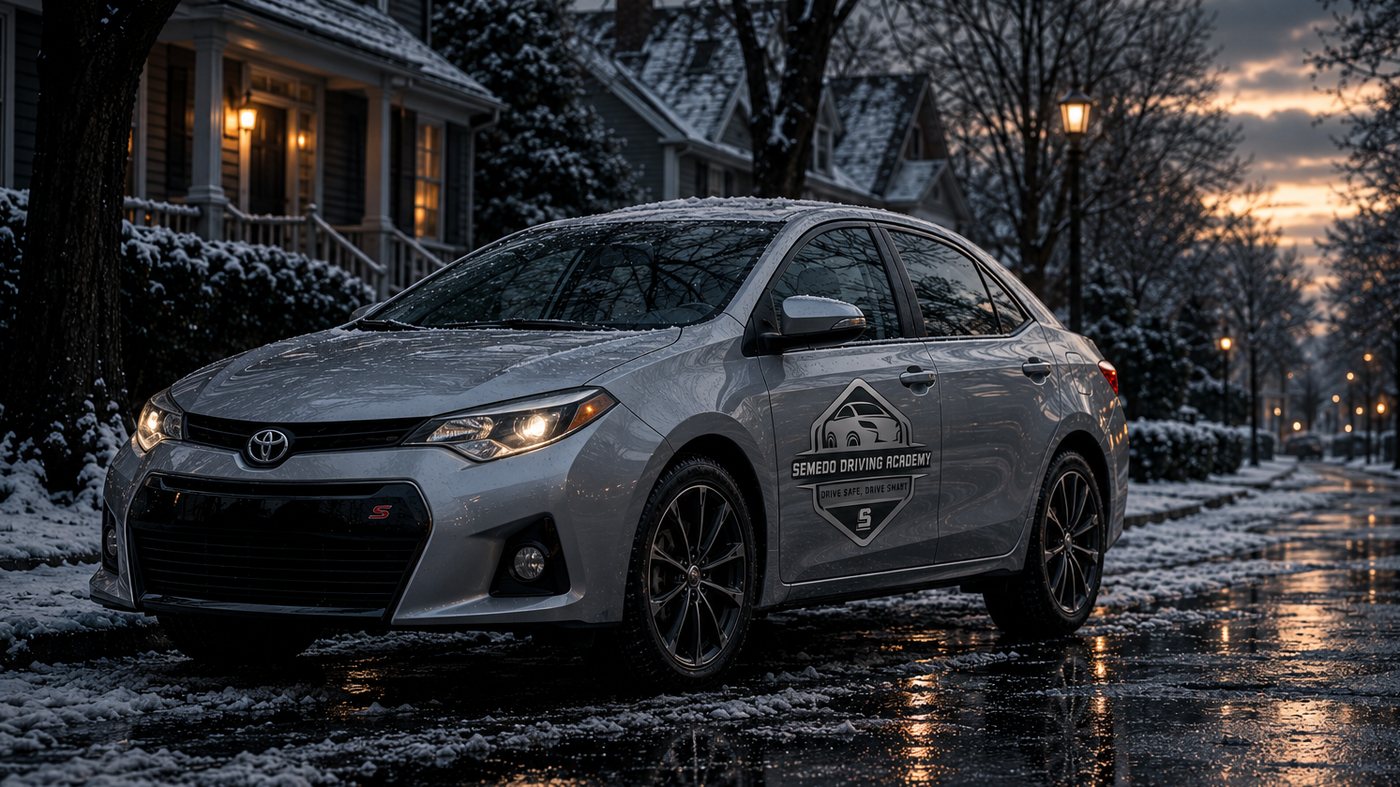
There is a pattern to it. A teenager licensed in the spring drives beautifully all summer, and then meets their first black ice on a January morning on the way to school, on their own, with no experience of what a car does when the road stops gripping.
Everything takes longer
On snow or ice your stopping distance can stretch several times over. The single most useful adjustment is distance: leave far more room than feels necessary, and start slowing for lights and intersections long before you normally would. Braking gently and early works. Braking hard and late is what puts cars in ditches.
Black ice and where it hides
It looks like wet road. It turns up on bridges and overpasses first, because they lose heat from underneath, and it lingers in shade long after the sun has cleared everywhere else — which in a wooded New England town is most of the road. If you hit it, the answer is to do nothing dramatic: ease off the accelerator, keep the wheel pointed where you want to go, and do not brake hard.
Clear the whole car, not a porthole
All windows, the roof, the lights, the license plate. Snow left on a roof slides onto your windshield the first time you brake properly, at exactly the moment you needed to see.
Practice it on purpose
The best thing a parent can do is take a new driver to an empty, snowy parking lot and let them feel the car lose grip somewhere nothing can be hit. Ten minutes of that teaches more than any amount of being told. If that is not something you want to supervise, it is a good use of a refresher lesson — we do them all winter.